

Independence From What Holds You Back: A Plastic Surgeon’s Perspective
[By Dr. Prashantha Kesari N.K. | Nypunya Aesthetics Clinic, JP Nagar, Bengaluru ]
Explore how plastic surgery can address facial aging, nose concerns and body changes while helping patients feel confident without changing who they are.
On August 15, as India marks 79 years of sovereign selfhood, Dr. Prashantha Kesari reflects on a quieter, more personal form of independence — the kind won not on a battlefield, but on an operating table.
Every August, the tricolour climbs flagpoles across the country, and we are reminded — rightly — that freedom is never a passive inheritance. It is claimed. What is less often said is that the body has its own history of occupation: by excess adiposity, by the after-effects of pregnancy and rapid weight change, by skin laxity that no longer answers to gravity’s original terms, by anatomical asymmetries carried silently since adolescence.
For 79 years, the nation has been renegotiating its relationship with constraint. In my clinic, I watch patients do precisely the same thing — one consultation at a time.
The anatomy of constraint
In aesthetic medicine, we rarely use the word “independence,” but the concept underwrites almost everything we do. A patient presenting for body contouring is not chasing vanity; she is petitioning for release from a physique that no longer reflects her internal sense of self — often the residue of a C-section, a GLP-1-assisted weight loss journey, or simple genetic fat distribution that resists diet and exercise. The mismatch between how one looks and how one feels is its own form of occupied territory.
This is where my proprietary 4D Liposculpting technique earns its name. Unlike conventional liposuction, which addresses static fat volume in a single plane, 4D Liposculpting accounts for the fourth dimension — movement, musculature, and dynamic tissue behaviour — sculpting contours that hold their integrity whether the patient is standing, twisting, or flexing.
It is, in a sense, an engineering problem as much as a surgical one: precision cannulas, layered fat extraction, and selective preservation of superficial fat to maintain a natural transition zone. The result is not merely “less fat” but restored anatomical sovereignty — a silhouette that finally answers to the patient’s own terms rather than to inherited or acquired constraint.
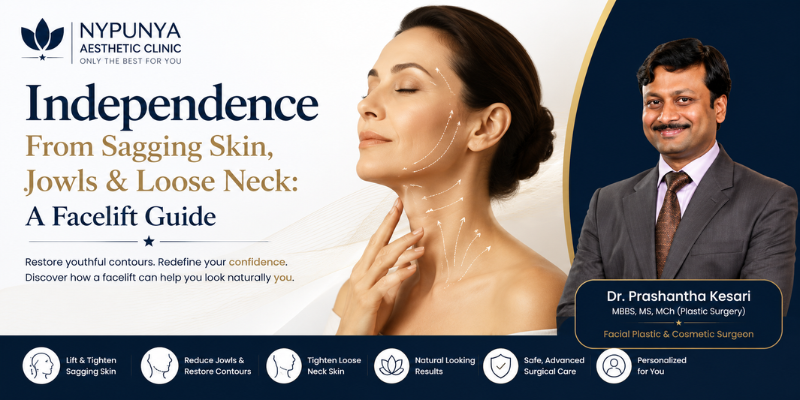
Facelift: independence from the calendar
The facial rejuvenation — deep-plane facelift and SMAS-based techniques in particular — addresses a subtler form of constraint: the assumption that chronological age must dictate visual age.
A well-executed facelift does not manufacture youth; it removes the excess and laxity that obscure a bone structure and musculature that were, in fact, never lost.
Rhinoplasty: independence of identity
Few procedures carry as much psychological weight as rhinoplasty. The nose sits at the visual and functional centre of the face, and a structural irregularity — whether congenital, post-traumatic, or the product of a poorly executed prior surgery — can dominate a person’s self-perception disproportionately to its physical size.
Using open and closed septorhinoplasty techniques tailored to cartilage quality, skin thickness, and functional airway assessment, we aim for a result that reads as inevitable rather than engineered: a nose that finally seems to have always belonged to that face. For our NRI patients in particular — many of whom travel from the UK, US, and Gulf specifically seeking MRCS-trained surgical judgment — this is often the single most transformative intervention we perform, precisely because it resolves a decades-long tension between self-image and mirror-image.
Gynecomastia and the quiet burden of concealment
If Independence Day commemorates the end of enforced silence, gynecomastia surgery deserves mention as one of the most under-discussed liberations in male aesthetic medicine.
Excess glandular and adipose tissue in the chest — whether hormonal, pubertal, or idiopathic in origin — often produces years of shirt-layering, posture compensation, and avoidance of swimming pools or gyms. Surgical correction, combining glandular excision with liposuction contouring where indicated, resolves not just a tissue excess but a behavioural pattern of concealment that can persist for decades if left untreated.
Breast surgery: reclaiming form after function
Breast augmentation, reduction, and post-partum restoration procedures (often bundled, in our practice, under comprehensive mommy makeover protocols alongside abdominoplasty and flank liposculpting) address a particular paradox: the body having served its biological function — pregnancy, lactation — often at the expense of its pre-existing form.
Restoring that form is not a rejection of motherhood’s demands but an assertion that the two need not be mutually exclusive. Independence, in this context, means not having to choose permanently between what the body did and what it once was.
A closing thought
India’s independence was never a single event but an ongoing negotiation — of borders, institutions, and identity. The body’s independence is similarly incremental, procedural, and deeply personal. As we mark 79 years of national self-determination this August 15, it is worth remembering that liberation, at any scale, begins with the decision to no longer accept an imposed and unnecessary constraint.
Nypunya Aesthetic Clinic — Only The Best For You.
What does “independence” mean in the context of plastic surgery?
Can body contouring help after pregnancy or significant weight loss?
What is 4D Liposculpting?
Can a facelift make me look younger?
What is the difference between Deep Plane and SMAS facelift techniques?
How can rhinoplasty change facial harmony?
Is rhinoplasty only performed for cosmetic reasons?
What causes gynecomastia, and how can surgery help?
Can breast surgery restore changes after pregnancy and breastfeeding?
Is plastic surgery about changing who you are?
What does Independence Day mean when we think about personal freedom and confidence?
Choosing the Right Plastic Surgeon
Selecting a plastic surgeon should involve much more than reviewing photographs or comparing techniques.
Patients should consider:
- Board certification and formal training in Plastic Surgery.
- Experience in performing both functional and aesthetic rhinoplasty.
- A thoughtful consultation that includes a detailed facial and nasal analysis rather than a standard treatment plan.
- An honest discussion about realistic expectations, limitations, risks, and recovery.
- Access to an accredited hospital with appropriate surgical infrastructure and patient safety protocols.
- A surgeon who is comfortable performing open, closed, structural, preservation, and revision rhinoplasty, selecting the technique that best suits the individual patient.
As I often tell my patients:
“Do not choose a surgeon because of the name of the technique. Choose a surgeon who understands the anatomy, has mastered multiple rhinoplasty techniques, and can customize the operation to your nose rather than making every nose fit the same operation.”
This philosophy consistently produces the most natural, functional, and long-lasting outcomes.
Why Choose Nypunya Aesthetics Clinic?
Every rhinoplasty at Nypunya Aesthetics Clinic is planned around the individual, not a fixed template. Dr. Prashantha Kesari combines functional and aesthetic goals in a single surgical plan, prioritizes patient safety through thorough pre-operative assessment, and provides structured long-term follow-up to track healing and final results. The underlying philosophy is facial harmony: a nose that supports breathing and belongs naturally on the patient’s own face, not a borrowed ideal.
About the Author
Dr. Prashantha Kesari N.K. — Senior Cosmetic Plastic Surgeon | M.Ch (Plastic Surgery), DNB, MRCS (Royal College of Surgeons, UK), DMLE, MBBS | Advanced Fellowship in Cosmetic & Laser Surgery | 20+ years of surgical experience | Pioneer of Ultrasonic Rhinoplasty & Endoscopic Scarless Facelift in Bengaluru | National gold medallist | Nypunya Aesthetics Clinic, JP Nagar, Bengaluru.
Disclaimer: This article is for educational and informational purposes only. Individual results and costs vary. Please consult directly with Dr. Prashantha Kesari for a personalised assessment before making any medical decision.

Category
Latest From Blog
Non-Surgical Rhinoplasty: 5 Things Nose Fillers Cannot Fix
How Long Should You Stay in Bangalore Before Returning to the UK After a Facelift?
Moisture vs Hydration: What Does Your Skin Actually Need?
Popular Tag