

Is Bangalore Better Than Mumbai, Delhi, or Chennai for Rhinoplasty?
[By Dr. Prashantha Kesari N.K. | Nypunya Aesthetics Clinic, JP Nagar, Bengaluru ]
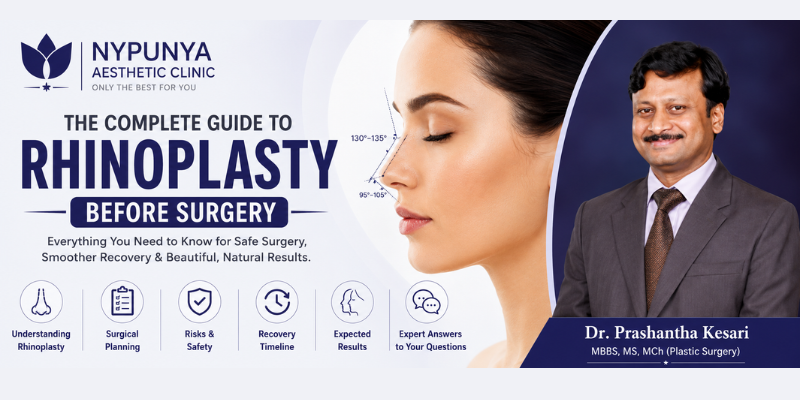
Rhinoplasty, or a “nose job,” reshapes the nose to improve appearance, correct breathing problems, or repair damage from injury or birth. People choose it for cosmetic reasons, functional reasons like a deviated septum, or both together. This guide walks through everything a patient should know before booking a consultation, based on Dr. Prashantha Kesari’s approach: individualized planning that balances facial harmony with breathing function.
1. Understanding Rhinoplasty
Rhinoplasty reshapes the bone, cartilage, and sometimes skin of the nose. Cosmetic rhinoplasty addresses shape concerns such as a dorsal hump, wide bridge, or bulbous tip. Functional rhinoplasty corrects breathing problems, most often a deviated septum or collapsed nasal valve. Many patients combine both in a single surgery, correcting appearance and airflow together.
2. Am I the Right Candidate?
Good candidates have completed facial growth (generally after age 16-18), are in good general health, and have realistic expectations. Men and women are equally suitable, but goals differ: men typically want a straighter, stronger profile, while women often prefer softer, refined contours. Thick-skinned noses show tip definition more slowly and swell longer; thin-skinned noses reveal even small irregularities, so technique must adapt to skin type. Patients with a previous nose injury or older adults with thinner cartilage need extra structural assessment before surgery.
3. Choosing the Right Surgeon
The right surgeon is board-certified, has a substantial portfolio of consistent before-and-after results, and spends real consultation time understanding facial anatomy rather than offering a generic template. Ask about their specific experience with your concern (revision, ethnic, or functional rhinoplasty), how complications are handled, and how results are personalized. Red flags include vague answers about technique, pressure to decide quickly, and an unwillingness to show unedited patient results.
Dr. Prashantha Kesari’s Expert Perspective: “A good rhinoplasty is invisible as surgery but visible as improvement. My planning always starts with the patient’s full face, not just the nose, because a nose that looks perfect in isolation can still look wrong on the face it belongs to.”
4. Planning Before Surgery
Preparation begins with a detailed consultation, medical history review, and basic blood tests. A CT scan may be needed if septal or sinus issues are suspected. Patients are asked to stop certain medications and supplements that increase bleeding risk, avoid smoking and alcohol for a defined period, and eat normally until the pre-surgery fasting window. Planning ahead for time off work, transport home, and someone to assist for the first day or two makes recovery considerably smoother.
5. Understanding the Procedure
Open rhinoplasty uses a small external incision for full visibility during complex reshaping; closed rhinoplasty hides all incisions inside the nostrils and suits smaller refinements. Surgery takes roughly one and a half to three hours under general or local anesthesia with sedation, usually as a day procedure or with a short overnight stay. Nasal breathing is temporarily reduced immediately after surgery due to swelling and internal splints, and this improves steadily over the following days.
6. Recovery: What to Expect
- Day 1: Swelling, mild discomfort, and congestion; rest with the head elevated
- Week 1: Splint removal; most bruising fades
- Month 1: Return to normal activity; residual swelling reduces steadily
Sleeping elevated for the first two weeks reduces swelling. Flying is typically avoided for at least a week, and gym or strenuous exercise for three to four weeks. Glasses that rest on the bridge should be avoided or taped up for four to six weeks. A normal diet is fine, though staying hydrated and avoiding excess salt helps limit swelling. Final results reveal themselves gradually over six to twelve months.
7. Risks, Safety & Results
Rhinoplasty is generally safe when performed by an experienced surgeon, but like any surgery it carries risks: bleeding, infection, temporary numbness, and occasionally the need for a minor revision. The nose does not “collapse” from a properly planned structural surgery; that concern usually arises from over-aggressive cartilage removal without adequate structural support, which experienced surgeons avoid. When planned around the patient’s own anatomy, results look natural and are permanent, aside from minor age-related changes over decades.
Is rhinoplasty painful?
How much does rhinoplasty cost, and can I finance it?
Can I wear glasses after surgery?
Can I travel after surgery?
Can I exercise or go to the gym?
Can I blow my nose or smile normally?
Will people know I had surgery?
Does insurance cover rhinoplasty?
Why Choose Nypunya Aesthetics Clinic?
Every rhinoplasty at Nypunya Aesthetics Clinic is planned around the individual, not a fixed template. Dr. Prashantha Kesari combines functional and aesthetic goals in a single surgical plan, prioritizes patient safety through thorough pre-operative assessment, and provides structured long-term follow-up to track healing and final results. The underlying philosophy is facial harmony: a nose that supports breathing and belongs naturally on the patient’s own face, not a borrowed ideal.
About the Author
Dr. Prashantha Kesari N.K. — Senior Cosmetic Plastic Surgeon | M.Ch (Plastic Surgery), DNB, MRCS (Royal College of Surgeons, UK), DMLE, MBBS | Advanced Fellowship in Cosmetic & Laser Surgery | 20+ years of surgical experience | Pioneer of Ultrasonic Rhinoplasty & Endoscopic Scarless Facelift in Bengaluru | National gold medallist | Nypunya Aesthetics Clinic, JP Nagar, Bengaluru.
Disclaimer: This article is for educational and informational purposes only. Individual results and costs vary. Please consult directly with Dr. Prashantha Kesari for a personalised assessment before making any medical decision.

Category
Latest From Blog
Flying Home After Rhinoplasty: Your Complete Travel Timeline
Rhinoplasty Complications: What Happens When Things Change
Beyond the Bandages: 4 Surprising Truths About Facelift Recovery
Popular Tag