

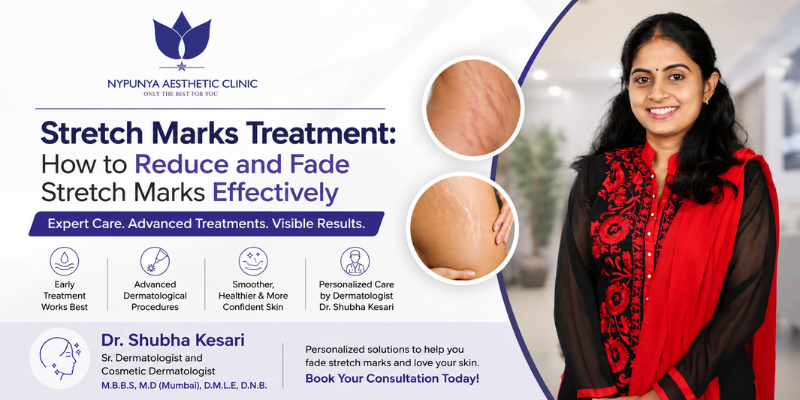
Stretch Marks Treatment: How to Reduce and Fade Stretch Marks Effectively
[By Dr. Shubha Kesari| Sr. Dermatologist and Cosmetic Dermatologist | M.B.B.S, M.D(MUMBAI) D.M.L.E, D.N.B. | Nypunya Aesthetics Clinic, JP Nagar, Bengaluru ]
Congratulations on your weight loss journey! Hitting the gym and crushing your fitness goals is no small feat, and you should be incredibly proud of your progress. However, as the pounds drop, you might start noticing a common side effect: stretch marks.
It can be frustrating to lose the weight only to find these stubborn lines left behind. But here is the good news—there is absolutely no need to fret over them. While they are a completely natural part of your body’s transition, there are highly effective ways to minimize their appearance, especially if you catch them early.
Stretch marks, medically known as striae, develop when the skin stretches or shrinks rapidly. This sudden change causes the collagen and elastin fibers—the structural proteins that keep your skin firm and elastic—to tear. As the skin heals, these tiny tears appear as visible lines. Weight loss, pregnancy, puberty, rapid muscle gain, and hormonal changes are among the most common reasons people develop stretch marks.
Although stretch marks are harmless and do not affect your overall health, they can impact self-confidence for many individuals. The encouraging news is that advances in dermatology now provide multiple treatment options that can noticeably improve their appearance.
Timing is Everything: Target “Young” Stretch Marks
If you want the best possible results, the secret lies in when you start treating them.
When stretch marks are in their initial stages, they typically look reddish or pinkish. These are considered “young” stretch marks. Because they are still developing and have active blood flow, they are much easier to treat and can actually be reduced to a great extent.
The earlier you seek treatment, the more responsive your skin is likely to be. During this stage, collagen production can be stimulated more effectively, helping the skin repair itself before the marks mature into permanent scars/
Early Topical Treatments
For these fresh, reddish marks, early application of specific active ingredients can work wonders to fade them:
- Tretinoin: A powerful retinoid that helps rebuild collagen in the skin.
- Glycolic Acid: An alpha-hydroxy acid (AHA) that promotes cell turnover and improves skin texture.
It is important to remember that these treatments should be used under the guidance of a qualified dermatologist. Certain products, particularly retinoids like tretinoin, are not recommended during pregnancy or breastfeeding. Your dermatologist can recommend safe alternatives based on your medical history and skin type.
Consistent skincare also plays an important supporting role. Keeping your skin well moisturized improves hydration and elasticity, while using sunscreen on exposed areas helps prevent stretch marks from becoming more noticeable due to pigmentation changes.
Advanced Dermatological Procedures
If your stretch marks have been around a bit longer, or if you want to fast-track your results, over-the-counter creams might not be enough. Fortunately, modern dermatology offers several advanced procedures that can significantly reduce the appearance of stretch marks (even if they can’t erase them 100%).
Procedure | How It Works |
Trichloroacetic Acid (TCA) Peels | A chemical peel that deeply exfoliates the skin, encouraging new, smoother skin to grow in its place. |
Microneedling Radio Frequency (RF) | Combines tiny needles with radiofrequency energy to stimulate deep collagen and elastin production. |
Dermapen Microneedling + PRP | Uses a microneedling pen combined with Platelet-Rich Plasma (PRP) injections (derived from your own blood) to accelerate tissue healing and skin regeneration. |
Fractional CO₂ Laser | A laser treatment that target-heals microscopic areas of the skin, triggering a massive boost in collagen to resurface the stretch marks. |
These procedures are typically performed over multiple sessions, with gradual improvement becoming visible as your skin naturally produces new collagen. Depending on the severity and age of your stretch marks, your dermatologist may recommend combining two or more treatment modalities to achieve the best possible outcome.
Every individual’s skin responds differently, so treatment plans should always be customized. Factors such as skin tone, the location of the stretch marks, their age, and your overall health all influence which procedure will provide the most effective results.
Maintaining a stable weight, following a protein-rich diet, staying hydrated, and avoiding smoking can also support collagen production and enhance your treatment outcomes. Healthy lifestyle habits complement professional treatments and help maintain smoother, healthier-looking skin over time.
The Bottom Line
Your stretch marks are simply a roadmap of where you’ve been, but they don’t have to define your skin’s future. When treated early, the results of these therapies can be incredibly satisfying. Even older stretch marks can often be softened and blended with the surrounding skin using modern dermatological treatments.
The key is to set realistic expectations. While no treatment can completely erase stretch marks, today’s advanced technologies can significantly improve their texture, color, and overall visibility, helping you feel more confident in your own skin.
Ready to take action? Skip the guesswork and consult a certified dermatologist. They can evaluate your skin type, assess the age and severity of your stretch marks, and recommend the most effective treatment plan tailored specifically for your needs. With the right guidance and timely intervention, smoother, healthier-looking skin is well within reach—and your journey toward confidence can continue long after your weight loss success.
📍 Website: https://nypunyaaesthetics.com/
📞 Call / WhatsApp: +91 97385 45945| 9380902114
💬 Chat:+918050111908
📧 Email: clinic.nypunyaaesthetic@gmail.com

Category
Latest From Blog
Non-Surgical Rhinoplasty: 5 Things Nose Fillers Cannot Fix
How Long Should You Stay in Bangalore Before Returning to the UK After a Facelift?
Moisture vs Hydration: What Does Your Skin Actually Need?
Popular Tag